In Association with
As a timber specialist and someone with a passion for quality decking I’ve spent years watching YouTube videos by Dr Decks and listening to The Ultimate Deck Podcast show, presented by Shane Chapman. I have always been intrigued by the different options available when designing a deck, especially combined with a skill-set I already possessed.
It was during lockdown in early April that we saw an increase in enquiries for composite decking. Much of the work didn’t excite me, standard rectangular decks, the cheaper the better.
It was at this point I realised that I wasn’t interested in competing for basic and run-of-the-mill projects. My expertise was going to waste and it was time to push my experience and abilities much further.
I invested in a set of Heatcon Systems Heat-Forming blankets for decks and some Trex boards to practice on. I bought materials and tools and created my own curving table.
At the first opportunity I tried my new toy out for the first time. After an hour and 20 minutes I had cooked my first board, it was durable and pliable, but it had blistered. Not a perfect start, but a promising one.



At the same time I had an enquiry for a curved deck in London, a pleasant coincidence and a complete surprise. The client had seen a trex curved deck on the internet and wanted one, but couldn’t find anyone capable of creating a perfectly curved deck in the UK.
After meeting the potential client and talking through the possibilities, he felt even though I’d never built one, he had enough confidence in me to achieve his vision, which was very kind of him.
Despite having no success with my initial experiments and no real experience in heating and bending composite decking, I jumped at the opportunity.
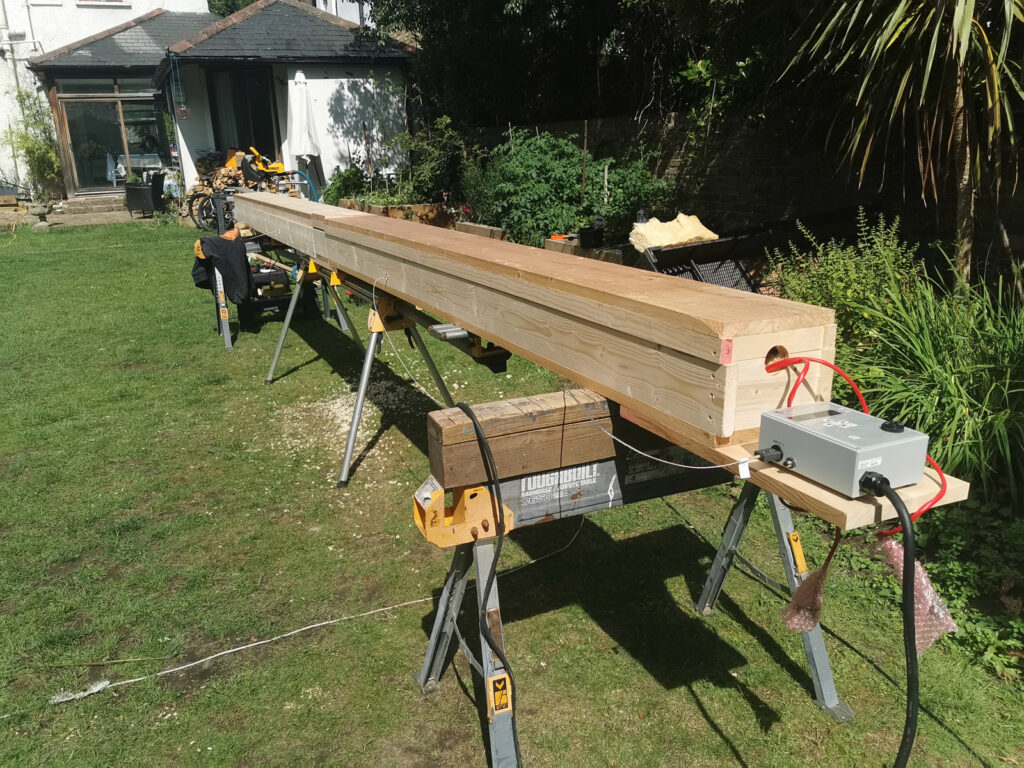
I designed a telescopic radius arm to help me mark out my perfect curve, built a timber coffin to house and insulate my Heatcon blankets, keeping the heat in. I marked out and made my curved template, ready to start cooking my boards.
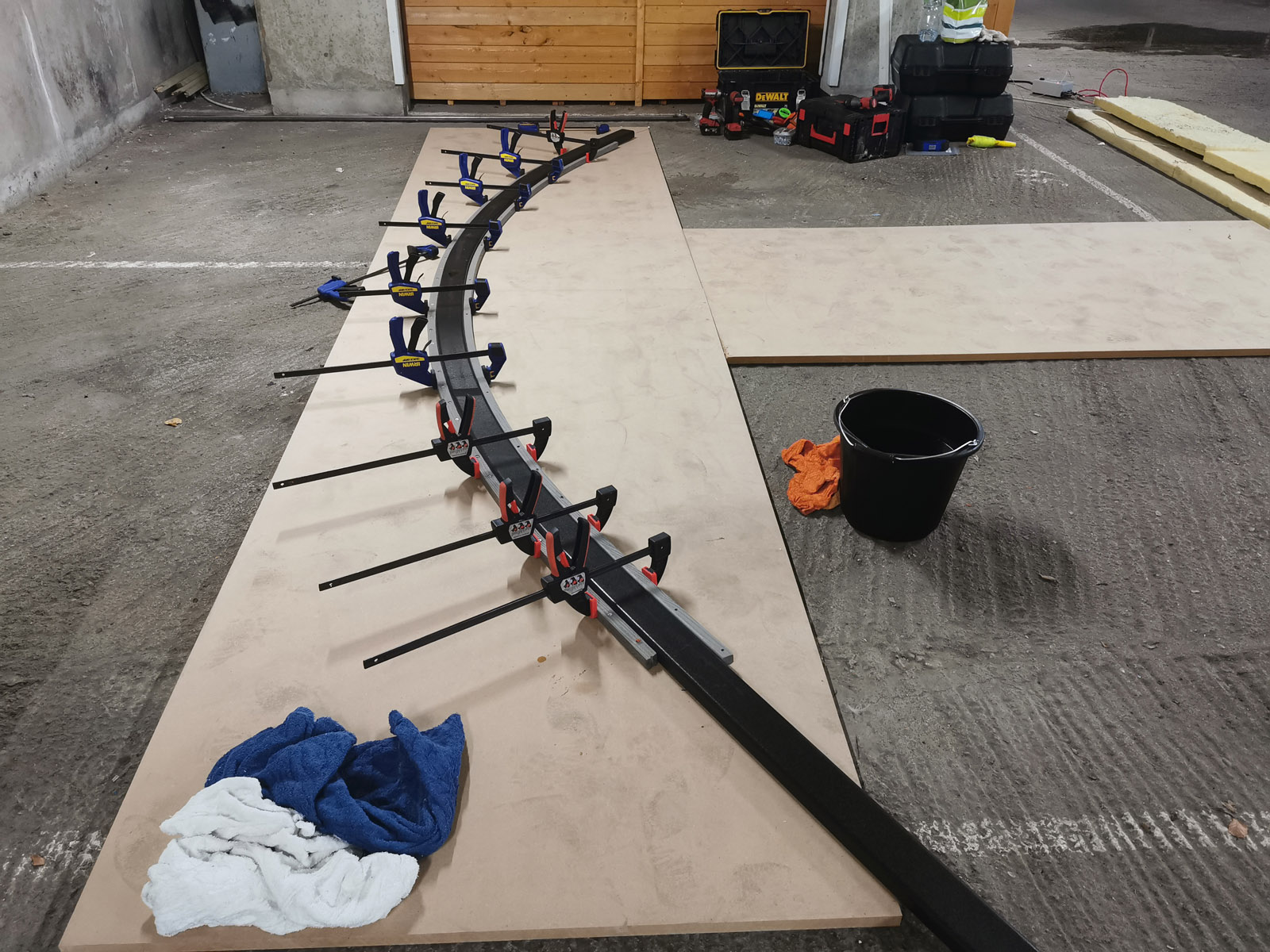
Now was the tricky bit, working out the temperatures. Not too hot that they blister the cap stock of the board, but hot enough to be pliable. After a few attempts and some handy advice from Shane Chapman, I dialled in the magic number and “wow”, I curved my first board to perfection. A super proud moment for myself and my loyal helpers.
The deck had 2 radius one at 3.6m and one at 4.5m. Both quite easy to achieve.
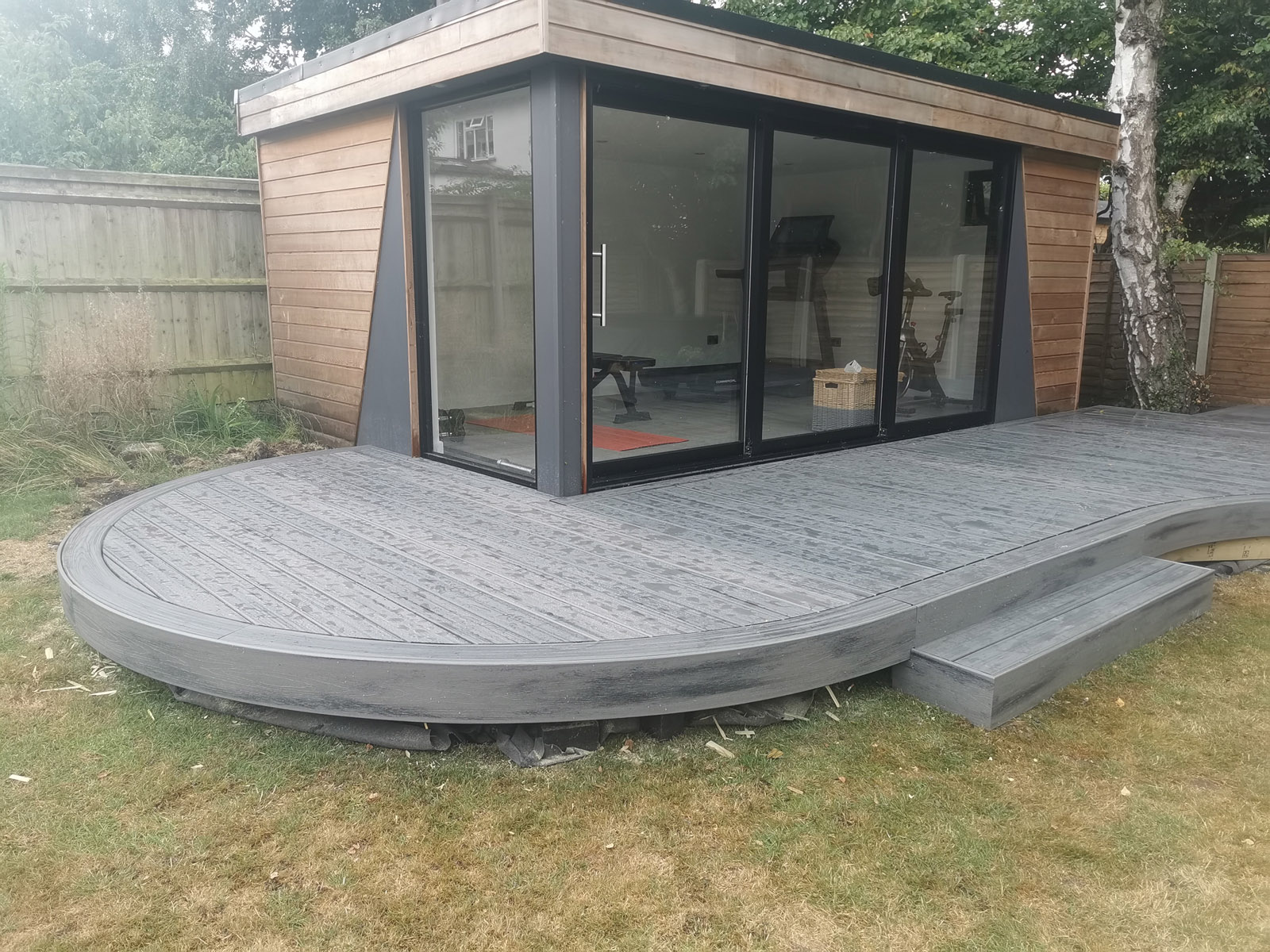
The UK’s first ever composite curved deck by the use of heatcon blankets was fully underway and as you can see it’s not too bad for my first attempt. Hopefully, the first of many.
I had found a new skill. I had created London’s first custom curved deck. I had achieved something no-one else in the UK had managed using heatcon blankets. That was it, I was hooked.
My second project was in Epsom, Surrey. A smaller deck, but with a tighter curve at a radius of 2.1m. With a bit of practice I cooked my boards to perfection and achieved this much tighter curve.
I’d furthered my understanding of what’s achievable and how far I could manipulate a straight composite board.
Then, having successfully mastered the Trex Transcend composite decking range, I moved my focus to Timber Techs Easy Clean Reserve range, comfortably making a 2.4m radius on my first attempt.
I also managed to achieve the same result with the Envirobuilds Hyperion Frontier range of composite deck boards.
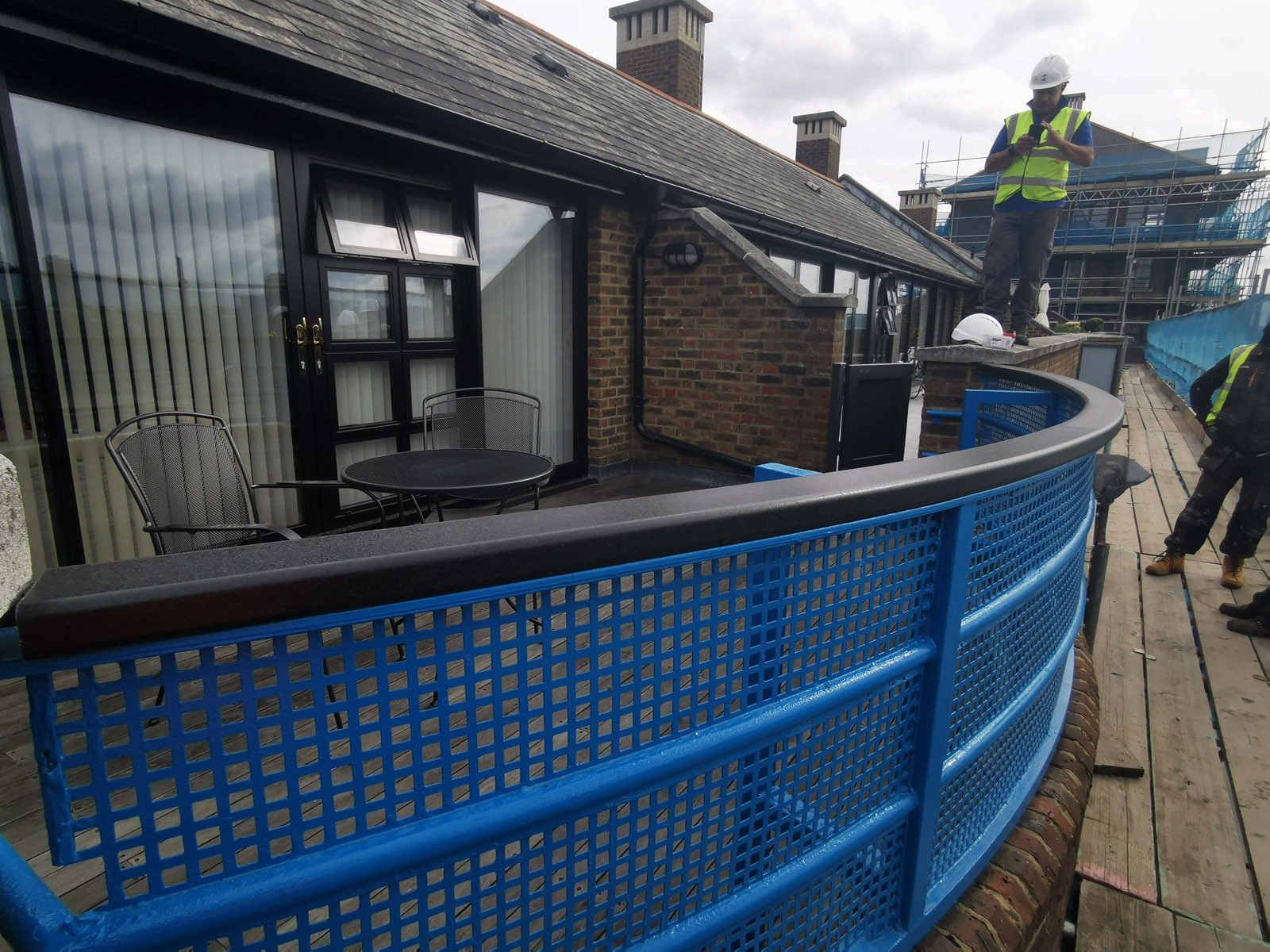
Recently I was given the opportunity to curve some Ecodek capping to complete a metal curved balustrade on a river side property in London.
I hope to continue creating perfectly curved decks for the foreseeable future. I love to learn and achieve new things.
Phone: 07756 269011
Email: customcurvedecking@gmail.com
Copyright © 2024 A Brighter Shade of Green - Site design by VWD